
The Agentic Integration Platform
Declare your agent capability
Turn the APIs you already use into MCP tools, Skills, and REST endpoints from one YAML file. You can build one in minutes. Your security team can read it before any credential is attached.
Runs in your browser. Nothing to install.
The problem
Your agent doesn't need 200 MCP tools
A customer asks "where's my order?" The agent needs two operations from two systems, combined into one tool that returns only what it should say.
How it works
Compose the APIs you already use into one capability
Point to the systems the agent needs, compose the calls server-side, and choose exactly what the agent sees. One capability is served three ways from the same file.
your APIs
one YAML spec
Your capability
consumesthe APIs you already useaggregatescalls composed into workflowsexposesonly the tools it shouldserved as
From the IDE to production
Works with your team's existing workflow
Write the spec yourself or let your coding agent draft it. Each integration works on its own, so use the ones that fit how your team already builds and runs software.
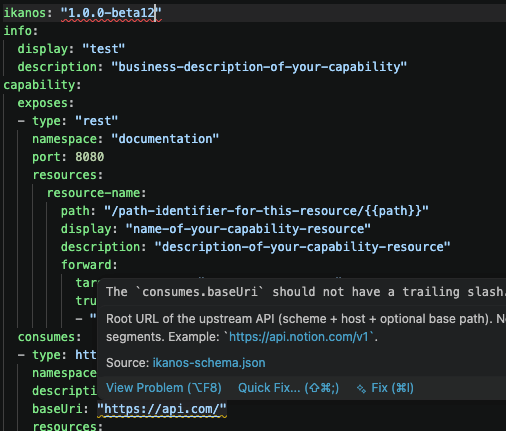
01 · Author
VS Code extension
Write capability specs and lint them as you go, in VS Code and AI IDEs.
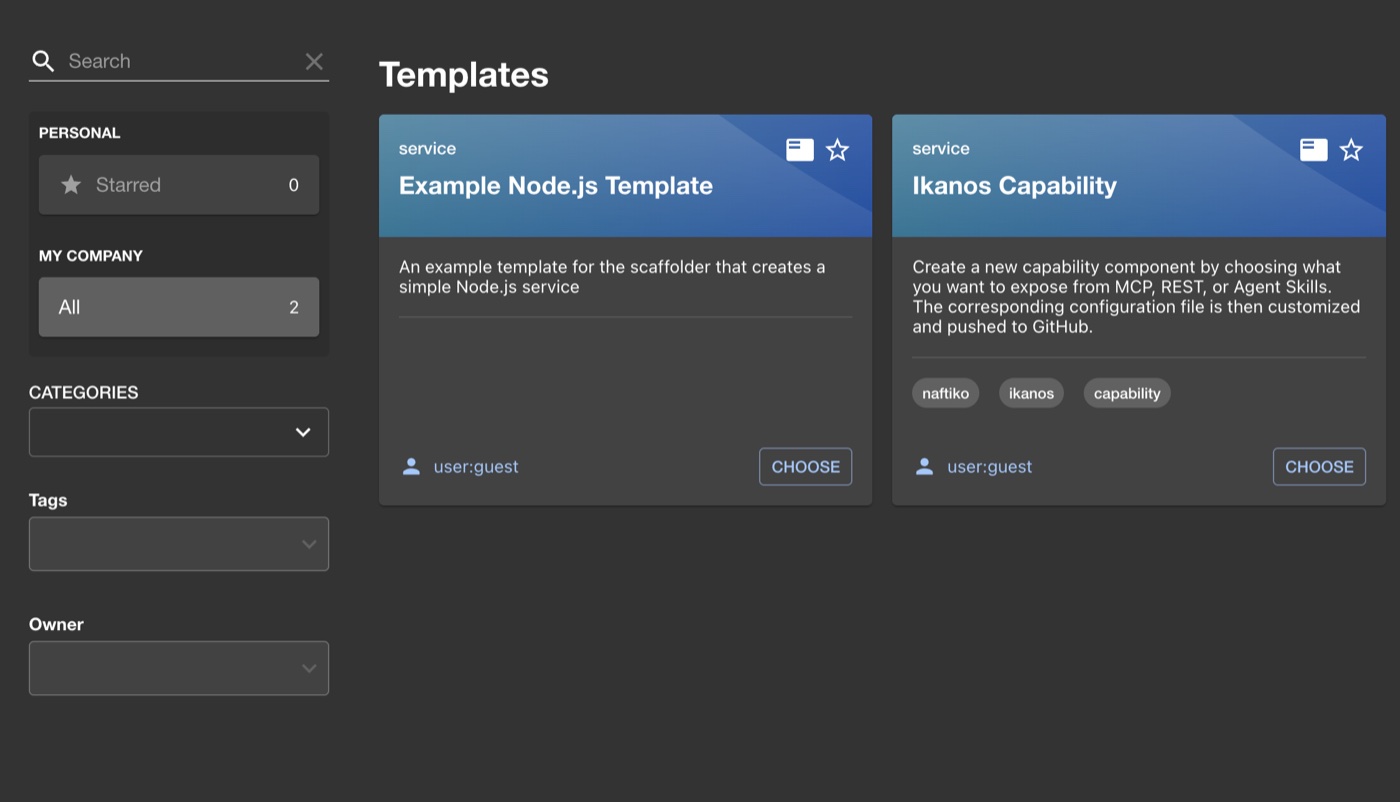
02 · Govern
Backstage integration
Scaffold a capability from a template and track it in your catalog.
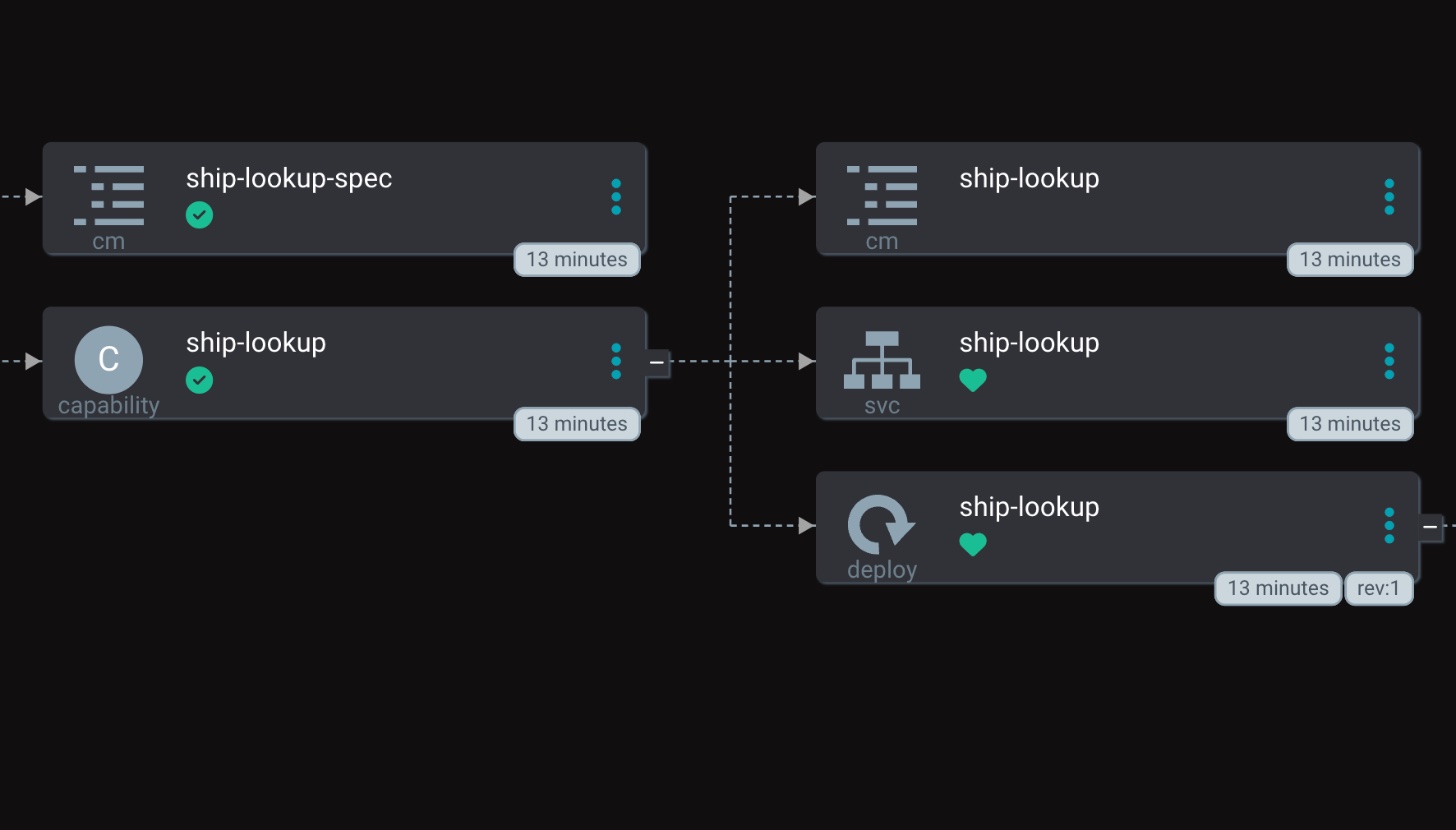
03 · Operate
Kubernetes integration
Each capability is a Kubernetes resource. Sync it with Argo CD and watch it in Grafana.
Governance
Security review is built into how you ship
Agent pilots stall when nobody can say what the agent is able to reach. With Naftiko, the answer is in a file your teams already know how to review.
Add order-status capability
Reaches 2 read operations. No writes, no refunds.
Returns 3 fields. No email or address.
Lint rules passed in CI.
Credential bound from vault, never in the file.
Use cases
See where teams start
Where it runs
Try it in your browser. Run it on your own infrastructure.
The spec you write in the browser runs unchanged on your own infrastructure. The engine and linter are open source under Apache 2.0.
In your browser
Try a capability now
Write, lint, and run a capability with nothing to install.
Try it now →Self-hosted
Run it where your data lives
Deploy with Docker or on your own Kubernetes cluster. Connect Backstage for governance.
View on GitHub →Hosted Coming soon
We run it for you
Sign up and run capabilities on our infrastructure, with no cluster to manage.
Get notified →Bring an API you use
Try a capability in your browser, or book a session and we'll sketch it with you. We also run paid design partnerships with a small number of teams.