I had a conversation with an executive at a household-name telecom company at an event last week. She is sharp, senior, and one of the people her organization is leaning on to figure out their agent strategy.
We were talking through the public services her company uses — the ones I had pulled from their job postings and press releases — and she nodded along. Yes, we use that. Yes, that one too. Yes, we license that. Then I asked the question I have been asking everyone lately.
Do you know which of those tools your agents will need to reach into?
She paused. Long enough for me to understand the answer before she gave it. Honestly? No. I had not even thought about it that way.
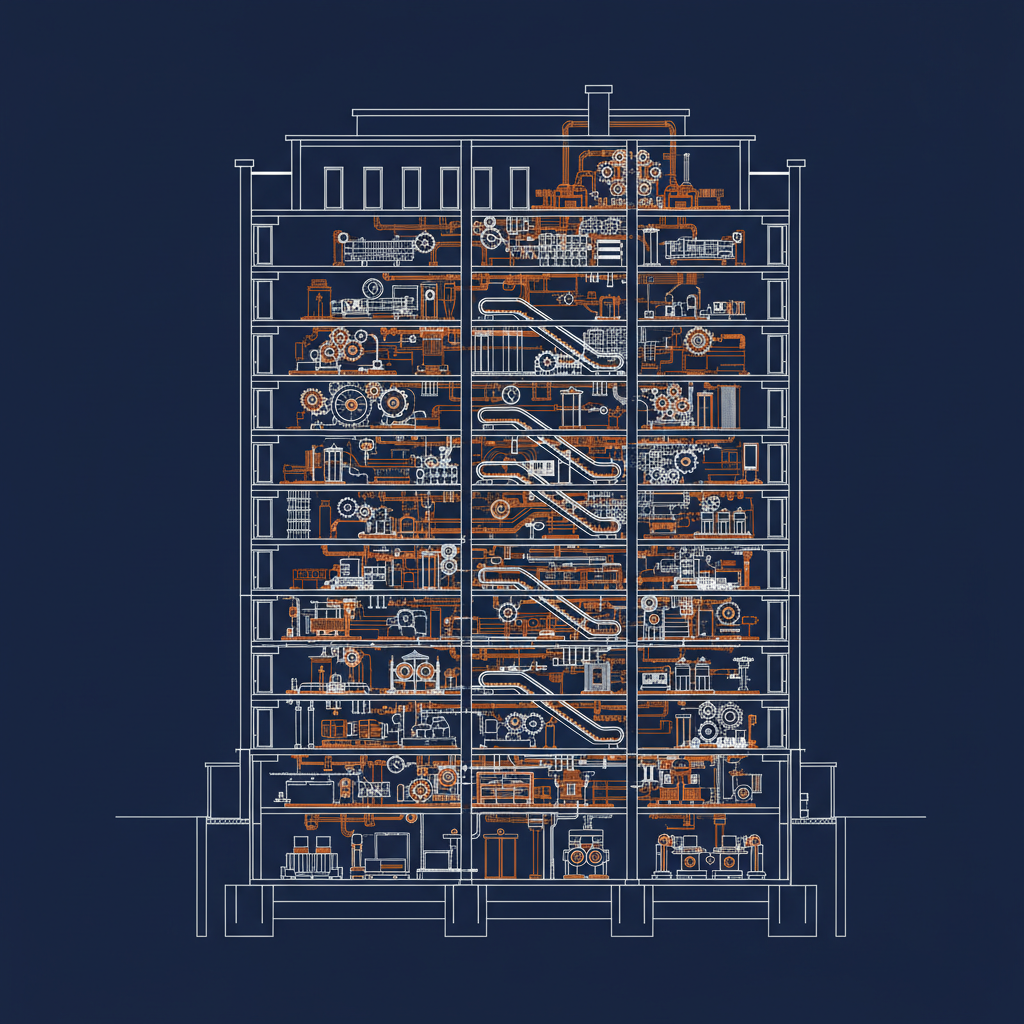
That is the moment I want to put in front of you. Because it is happening in every Fortune 1000 enterprise right now, and almost nobody is naming it out loud. The people the organization is asking to drive the agent strategy cannot see the stack underneath the strategy. Not because they are not capable — they are, by definition, some of the most capable operators in the building — but because for their entire careers the stack was tended for them by an IT walled garden that did not ask them to see it.
Now AI asks them to.
The walled garden was a feature, not a bug — until it wasn’t
For most of the last thirty years, corporate IT made a deal with the rest of the enterprise that worked extremely well. We will run the stack. You will run the business. You will tell us what you need; we will procure it, integrate it, secure it, version it, retire it. You will not need to know how any of it works. The business user got tools that mostly worked. IT got control of a sprawling environment without having every department demand its own opinion on every integration. It was a useful abstraction.
That abstraction worked because every previous technology wave — client-server, cloud, mobile, SaaS — left the underlying stack inside IT’s responsibility surface. The business user might pick a SaaS vendor; they did not need to think about how that vendor’s data integrated with twelve other vendors’ data, or who held the keys, or where the integration brittleness was hiding. IT did. The abstraction held.
AI is the first wave that breaks it.
When the business user pulls an AI assistant into their workflow and asks it to read from CRM, summarize the support ticket queue, and draft a customer email — the assistant has to reach into three or four systems IT has been quietly running for years. The abstraction the business user has relied on for their entire career assumed that no business user would ever need to know what is on the other side of those three or four systems. That assumption is now wrong, for the first time, and the business user is sitting there with a copilot interface waiting for an answer they have never had to think about.
Why the executive at the telecom did not know
It is worth being precise about why she did not know. It was not ignorance. It was not laziness. It was a correct inheritance from a working agreement that no longer applies.
She had never had reason to know which SaaS vendors her team’s workflows depended on at the API layer, because she had never been the consumer of those APIs. IT was. She had never had reason to know which of those services exposed an MCP server or had agent-skills bundles, because no agent of hers had ever asked. She had never had reason to know which of her vendors were tightening API access this quarter and which were opening it, because the rate of change at that layer was IT’s problem, not hers.
The minute her team is running agents that need to reach into those vendors, every one of those questions becomes hers. And there is no precedent in her experience for how to answer them.
This is the moment Naftiko Signals was built for. Not because we think every executive should turn into an API specialist overnight. They should not. But because the stack is now legible from the outside, and the outside is the only place a non-IT operator can start.
What “from the outside” means in practice
The internal view of an enterprise stack is gated by IT. The external view of an enterprise stack is gated by nobody. It is sitting in plain sight in public job postings, press releases, integration partner directories, vendor case studies, and public APIs.
That is the read Naftiko Signals is doing every week. We score 44 signal categories across every company we profile — what cloud they run, which data platforms they invest in, which API vendors they integrate with, which standards bodies they participate in, which roles they are hiring for. None of it is from the inside. All of it is provable from the outside.
When the executive at the telecom looked at her own company’s profile, she saw — for the first time — a structured read of the stack she was being asked to govern from the agent layer down. The data was not new. She had been “near it” for a decade. But she had never had a single artifact that let her see the shape of it at once. That is what we built.
The same artifact works in the other direction. When she looks at her own profile, she sees herself. When she looks at the profile of a vendor she is evaluating, she sees them. When she looks at the profile of a competitor she is benchmarking against, she sees them. The asymmetry of “IT knows, business does not” was a function of who held the documentation. Now the documentation is external — and the executive who learns to read it has the same picture every analyst, every competitor, and every potential acquirer already has.
The new literacy
A decade ago we used to talk about digital literacy — the set of skills every business operator needed to function in a SaaS-led economy. The literacy got absorbed; you cannot get a corporate job today without some version of it. The next layer is stack literacy. The set of skills every business operator needs to function in an agent-led economy.
Stack literacy does not mean every executive becomes an API engineer. It means every executive can look at their own organization’s external footprint and answer five questions: What are we running. What is it for. Who reaches into it. Where is the agent gap. And what would we have to do to close it.
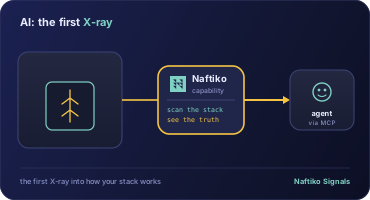
Naftiko Signals is the x-ray. The capability work that flows from it — declaring those services, packaging them into governed agent-reachable surfaces, making them safe to actually open up — is the part Naftiko does once you can see what is there. But the seeing has to come first. Nobody governs what they cannot see.
The executive at the telecom did not know. By the end of our conversation, she had a list. That is how this starts. One operator at a time, getting the x-ray for the first time in their career, and realizing the abstraction that worked for thirty years just stopped working.
The good news is that the seeing is the hard part. Once you can see the stack from the outside, the rest is work — but it is bounded work. The decade-long gap between the people who run the business and the people who run the stack closes a little bit every time an operator looks at their own company’s signals and recognizes themselves for the first time.
That is the only way the agent era works at scale. Start by looking.