
MCP-First Design
Design capabilities first for MCP clients, then map them to underlying APIs for a clean AI-native integration model.
Take Me to the Repo
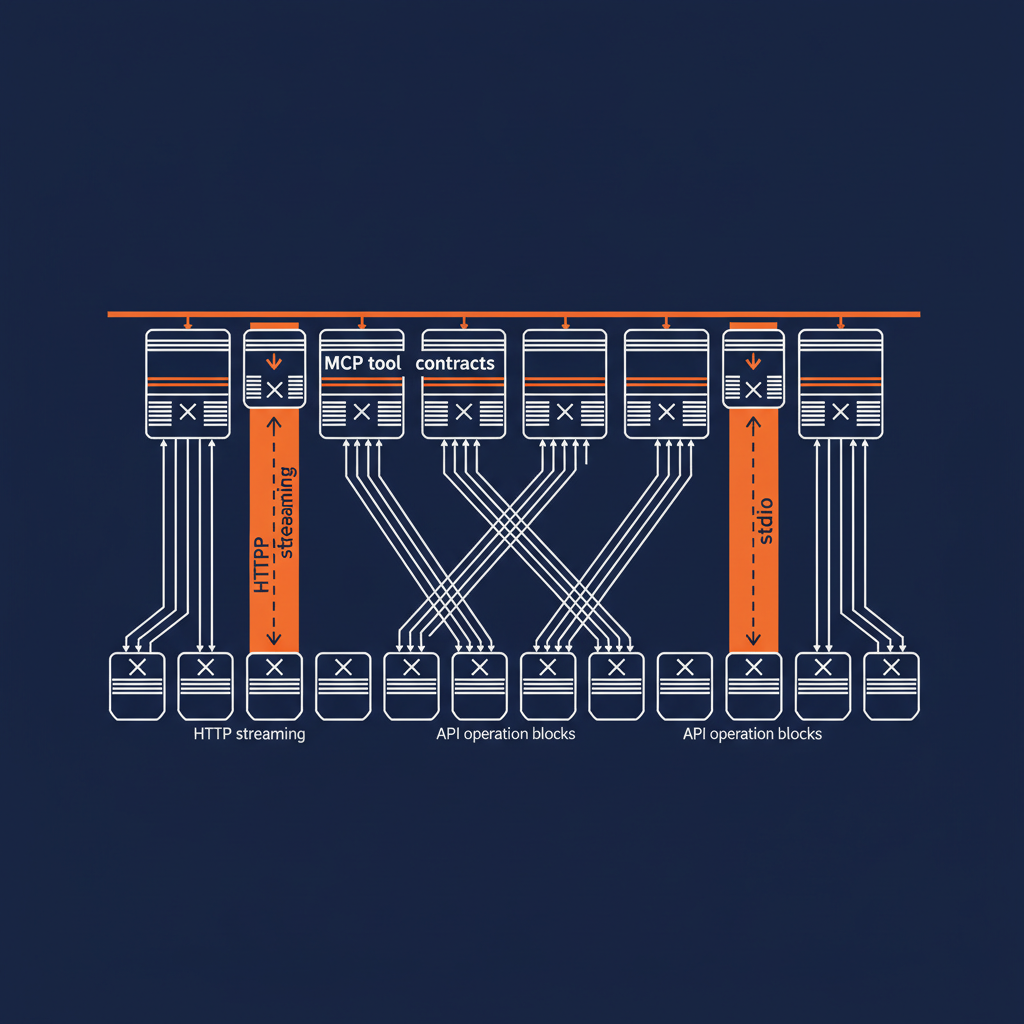
Define MCP exposure with server-level description and tool-level contracts -- name, description, input and output parameters. Support MCP transports (HTTP streaming and Standard IO) so the same capability can run in remote server mode or local IDE and agent mode.
Wire tools to one or many consumed operations via call or orchestrated steps, without changing upstream APIs. Start with the AI-native interface and work backward to the implementation.
Two engines, three components, one spec
The Agentic Integration Platform is tied together by Spec-Driven Integration (SDI) — a single declarative YAML spec, authored once, that turns an API into an agentic capability. Two open-source engines do the work. Three enterprise components carry the same reviewed spec, with its governance intact, onto the surfaces your teams already use.


Start small, scale smart
Design for AI first. Map to APIs second.
Chart your next course
API-First Design