
API-First Design
Start from existing APIs and define reusable capabilities on top, so API investments can power new AI and app experiences.
Take Me to the Repo
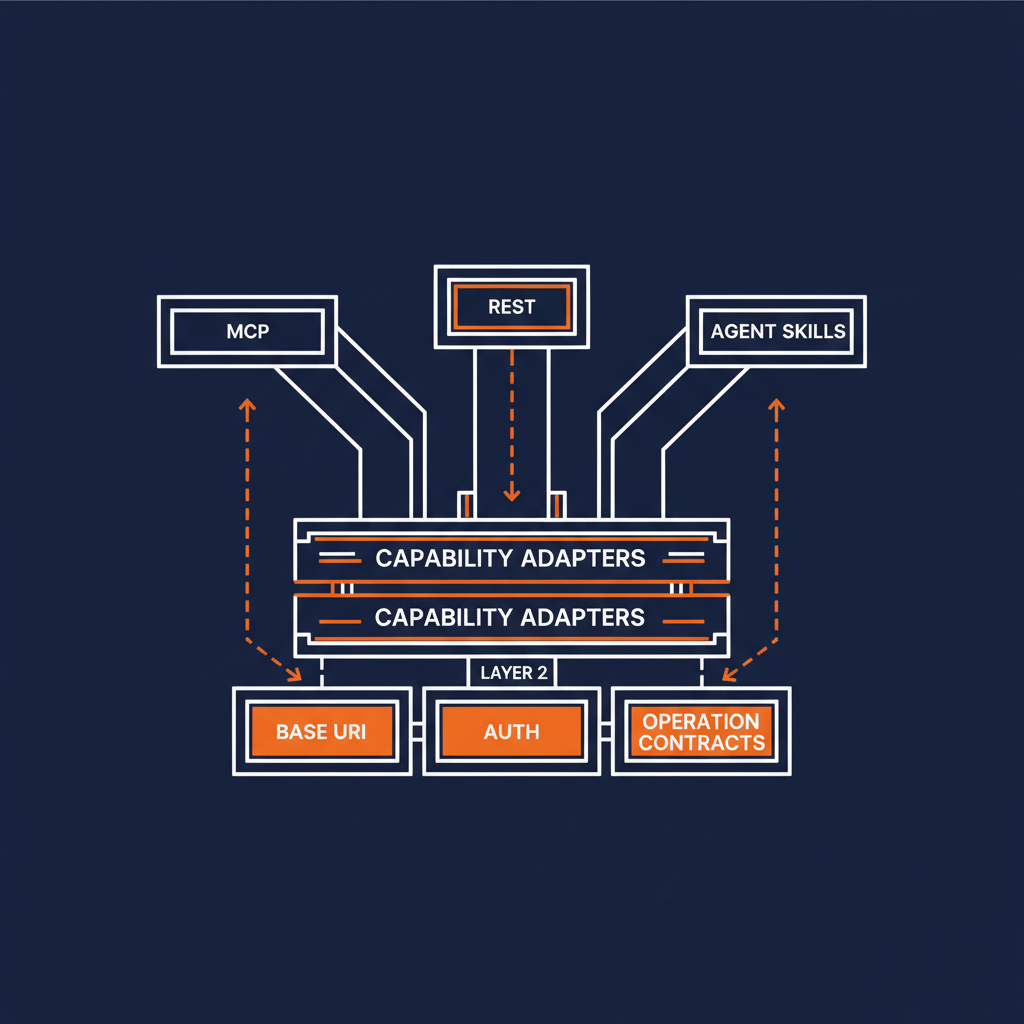
Begin with consumed API declarations -- base URI, authentication, resources, operations -- then incrementally add exposed API and MCP adapters. Reuse existing security and configuration using external references with file and runtime resolution and injected variables.
Add format-aware parsing and mapping (JSON, YAML, XML, CSV, Avro, Protobuf support) to normalize diverse backends. Your API investments become the foundation for new AI and application experiences.
Two engines, three components, one spec
The Agentic Integration Platform is tied together by Spec-Driven Integration (SDI) — a single declarative YAML spec, authored once, that turns an API into an agentic capability. Two open-source engines do the work. Three enterprise components carry the same reviewed spec, with its governance intact, onto the surfaces your teams already use.


Start small, scale smart
Start with what you have. Build what you need.
Chart your next course
Context Engineering