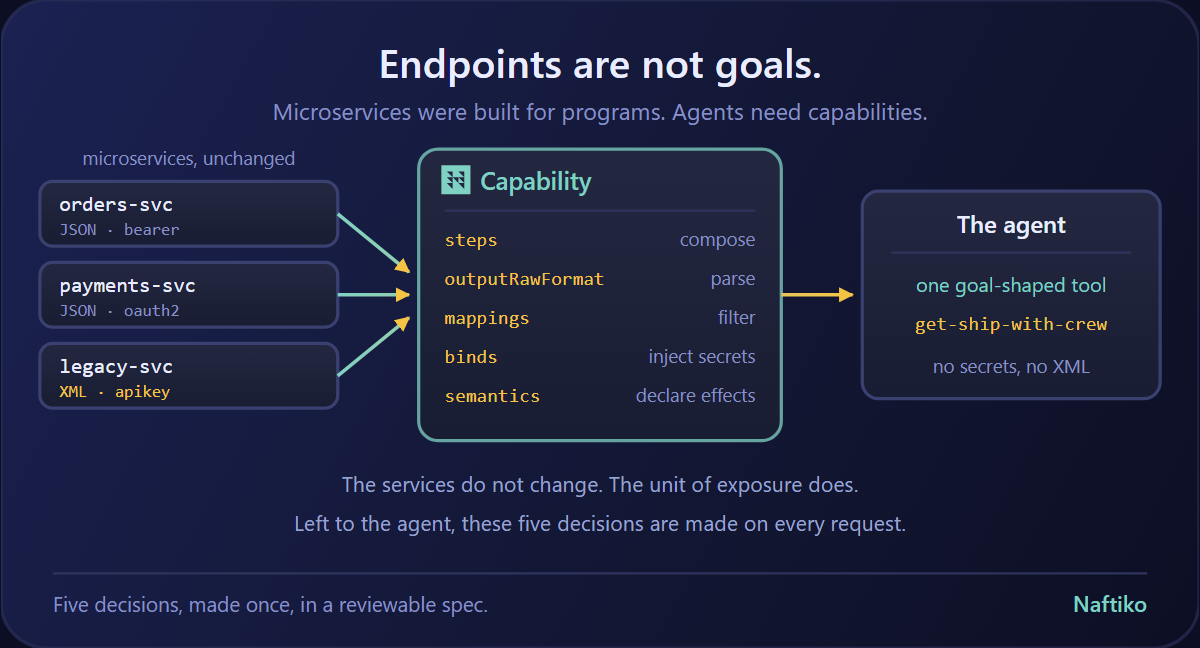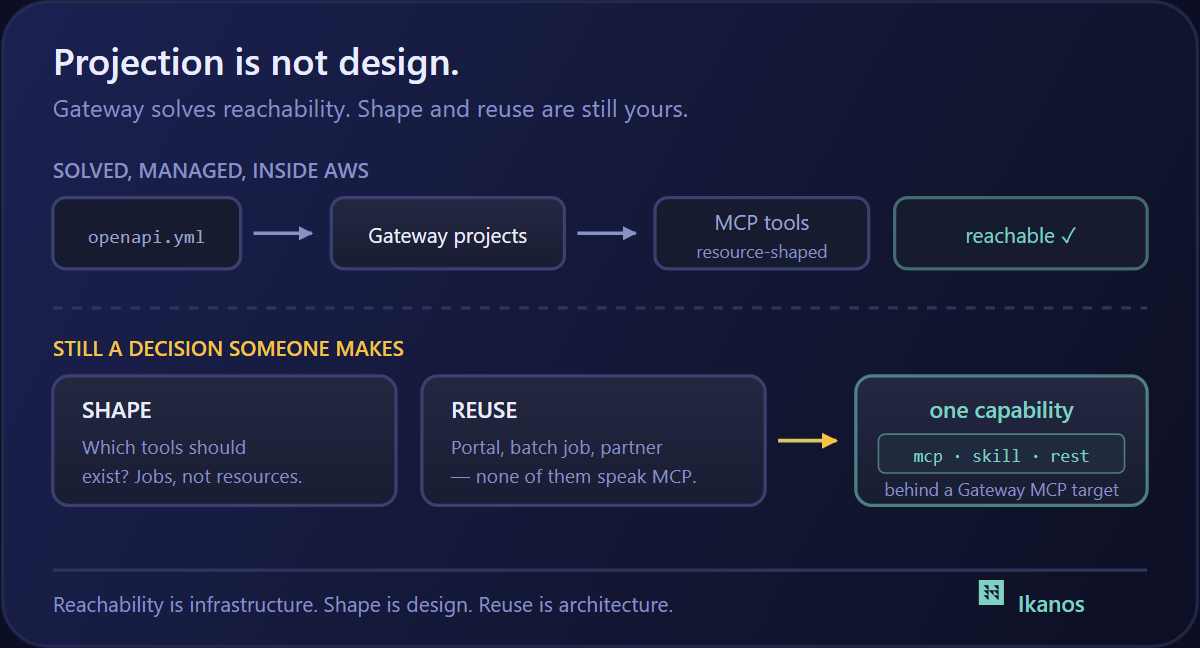

I did not expect to learn much when I pointed Naftiko Signals at LVMH. Luxury is the category I assumed would be the hardest to read through the lens of services, tools, and standards — a world built on craftsmanship, brand secrecy, and the deliberate refusal to behave like a normal consumer goods company. Louis Vuitton, Dior, Tiffany, Tag Heuer, Moët, Hennessy, Sephora — seventy-five houses, most of them allergic to talking about their plumbing. So I went in expecting the signal to be thin. What I got back was thinner than that. The total signal score came in at 0. Zero areas, zero services, zero tools, zero standards, zero languages detected. The strongest category was, technically, services — also at zero.
That is the post. That is the read.
Why luxury reads as silence
The honest thing to say is that Naftiko derives its scores from job postings, press releases, public filings, and earnings transcripts, and LVMH’s careers site — lvmh.com/en/join-us/our-job-offers — does not behave like Workday or Greenhouse. The maisons recruit through their own brand sites, often in French, often through executive search, and almost never with the kind of skills-heavy job descriptions that mention Kafka, OpenAPI, Snowflake, or MLflow by name. That is not an accident. The same instinct that keeps the leather-goods atelier behind a curtain in Asnières keeps the engineering org behind a curtain too. Luxury’s posture toward its technology stack is the same as its posture toward everything else: do not let the customer see how the watch is made.
The signal void is the signal
So the signals lens, applied here, surfaces a different kind of finding than it does for a Shopify or a Capital One. It surfaces a deliberate opacity. The empty Areas / Services / Tools / Standards tabs are not a gap in LVMH’s investment — they are a gap in what LVMH is willing to make legible to the outside world. And that opacity has real consequences. It means partners, agents, and downstream integrators have no shared vocabulary to plan against. It means the API-first integration layer, the AI governance council, the event backbone on Kafka or EventBridge — all the things our Top 5 recommendations point at — have to be inferred rather than observed. The Impact Report’s first three recommendations land in the same place I would land cold: stand up an API-first integration layer, charter an AI governance and review council, and invest in real-time data pipelines. Those are the moves you make when your only public signal is silence.
Luxury is not analog
Which brings me to the surprise. Luxury is not analog. I know it. You know it. The personalization engines behind Sephora’s Beauty Insider, the anti-counterfeit blockchain work LVMH spun out as AURA, the supply-chain telemetry that moves a Hennessy bottle from Cognac to Shanghai, the CRM that lets a Louis Vuitton client advisor in Tokyo know what a client bought in Paris — all of that is a serious technology stack. It is just a stack that LVMH has decided is not a story to tell. The signal void is the signal.
What would change the score
What’s next for a company like this is not more tooling. It is two things. First, a capability catalog — even an internal one — that names the services, tools, and standards in play so that the next AI agent inside the building does not have to guess. Second, a public posture, however narrow, that lets partners and the agent ecosystem find a door. Until then, the most useful thing Naftiko can do for LVMH is point at the empty room and ask why the lights are off.
The full Signals landing page lives at https://companies.naftiko.io/signals/lvmh/wOb53qLADH/ — empty tabs and all. That is the most honest read I can give you of how luxury treats its technology stack right now.