I had a moment last week that I keep coming back to. Someone asked me to translate what I do for an executive who, in their words, “doesn’t know an API from whatever.” Not as a dig — as a real ask. How do I tell them what this is, in a way that lands in thirty seconds?
It is the most important question in enterprise AI right now, and I think most of us in the API world keep getting it wrong.
The thirty-second version
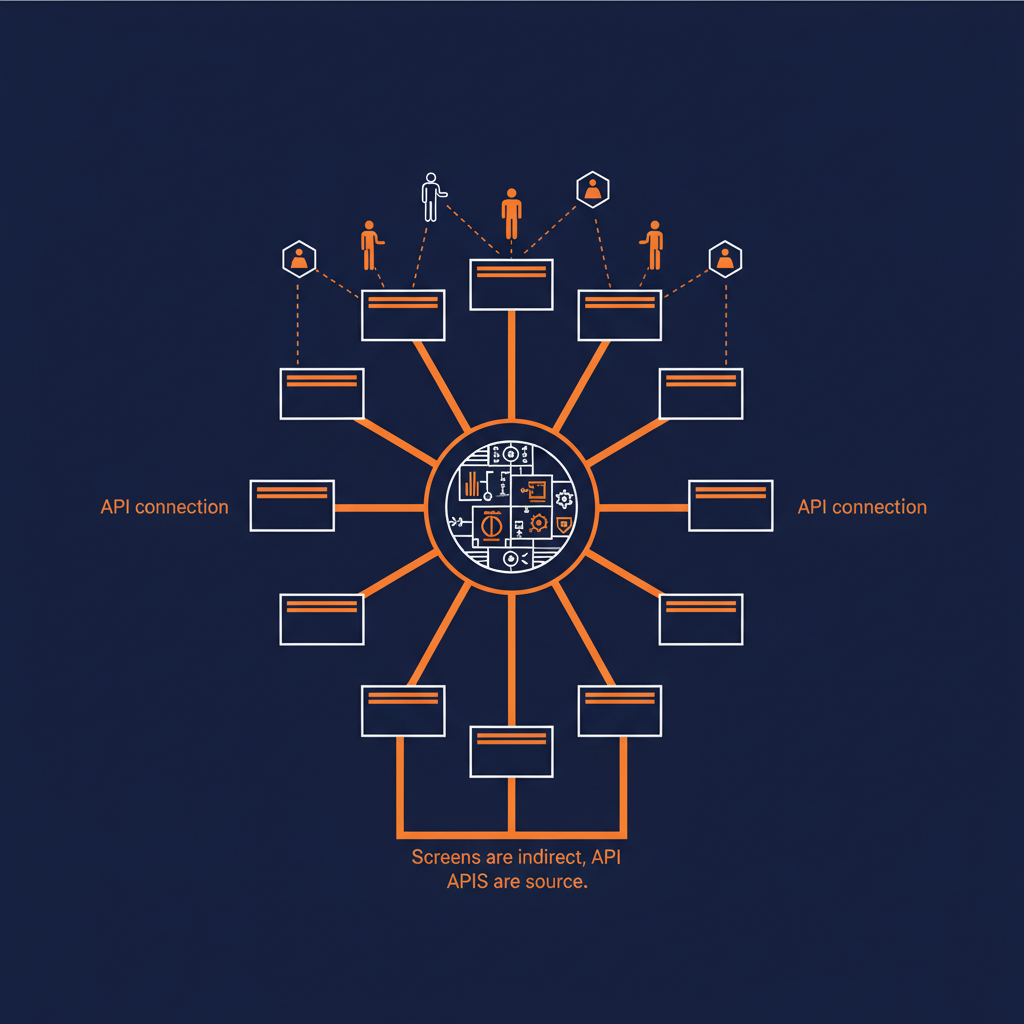
APIs are behind every piece of software you use today. Email, calendar, document storage, the customer record, the billing system, the chat platform, the ticketing system. All of it. Every screen you click is a thin layer of UI on top of an API doing the actual reading and writing.
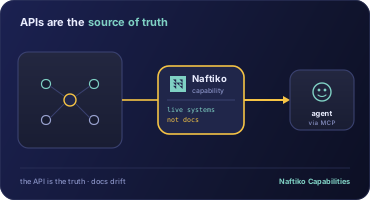
That means the APIs are the real source of truth about what your business is doing. Not the dashboards. Not the slide decks. The data lives in systems, those systems expose APIs, and the APIs are the only place where the answer to “what is actually happening right now” is honest.
That is the part the executive needs to understand. Once they understand it, the second part is obvious.
Your agents need that source of truth
You want your agents and copilots to help your business. You want them to answer questions, take actions, draft work, summarize accounts, flag risk. To do any of that well, they need access to the source of truth — the APIs behind your systems. In a safe, secure, context-aware, and governed way.
Today they almost certainly do not have it. Most copilots in the wild are reading the screen of a SaaS app or augmenting a browser tab. That is fine for some tasks. It is not fine for any task that needs the actual current state of your customer record, your billing balance, your inventory, or your pipeline.
If your agents are not reading and writing through the APIs that govern your real systems, they are guessing. Confidently, often plausibly, but guessing.
What “governed access” actually means
This is where most executives lose the thread, because the next concept usually shows up wrapped in jargon. Let me try the un-jargoned version.
When a vendor gives you an MCP server for one of their products, they are giving your agent access to all of that product. Every account, every record, every operation. That is too much access for most jobs. Your agent does not need every account in the CRM. It needs the one account it is working on, with the fields appropriate to the question, with a record of what it asked for and why.
Governed access means three things in plain English. What can the agent see — only the data that makes sense for this task. What can the agent do — only the operations that make sense for this task. What did the agent actually do — a log, traceable back to a person, a purpose, and a moment in time.
Without those three, you do not have an AI strategy. You have an AI hope.
Why this matters now, not later
Two things are true at the same time, and they pull in opposite directions. The first is that AI is moving faster than any technology shift in twenty years, and there is real productivity in giving agents access to your systems. The second is that the surface area of what an agent can do — once it has API access — is wider than anything your existing governance was designed for.
If you wait until you fully understand the second one before you act on the first, you will fall behind. If you race ahead on the first one without addressing the second, you will end up with a story you do not want to tell to your board.
The way through is to build the governed connective tissue between your systems and your agents first, and let the agents come online against that tissue, not around it. APIs as the source of truth. Capabilities as the unit of governed exposure. Observability as the receipt that the agent did what it claimed to do.
The translation that works
So here is the translation I keep iterating on. The version I would say to a chief of staff, a CFO, a board member, or anyone else who is being asked to approve AI investment without a deep technical background.
APIs are how every system in our business actually talks. Right now our employees use them indirectly, through the screens of the apps they log into. Our agents and copilots need them too — but they need them in a way that is scoped, secure, observable, and aligned to the work we want them to do. The thing in the middle that makes that safe, traceable, and reusable is what we should be investing in. Not because it is exciting. Because it is the only way the AI work we are about to do is defensible six months from now.
That is the elevator. It is not technical. It does not require anyone to know what REST is, or what an MCP server is, or where any of this lives in the stack. It requires them to understand one thing — that the APIs are the truth, and the agents need governed access to that truth.
If you can get an executive to that line, the rest of the conversation is much shorter.