Notion has done the work that every SaaS vendor is going to have to do this year. They shipped a hosted MCP server, published a documented catalog of supported tools, and opened up a self-hostable open-source version for teams that need to keep traffic inside their own perimeter. If your only goal is to give an agent access to Notion, you can stop reading. Plug in the URL, hand the agent its credentials, and you are done.
The question this post is for is the next one. What do you do when one MCP is not enough?
Where the vendor MCP ends
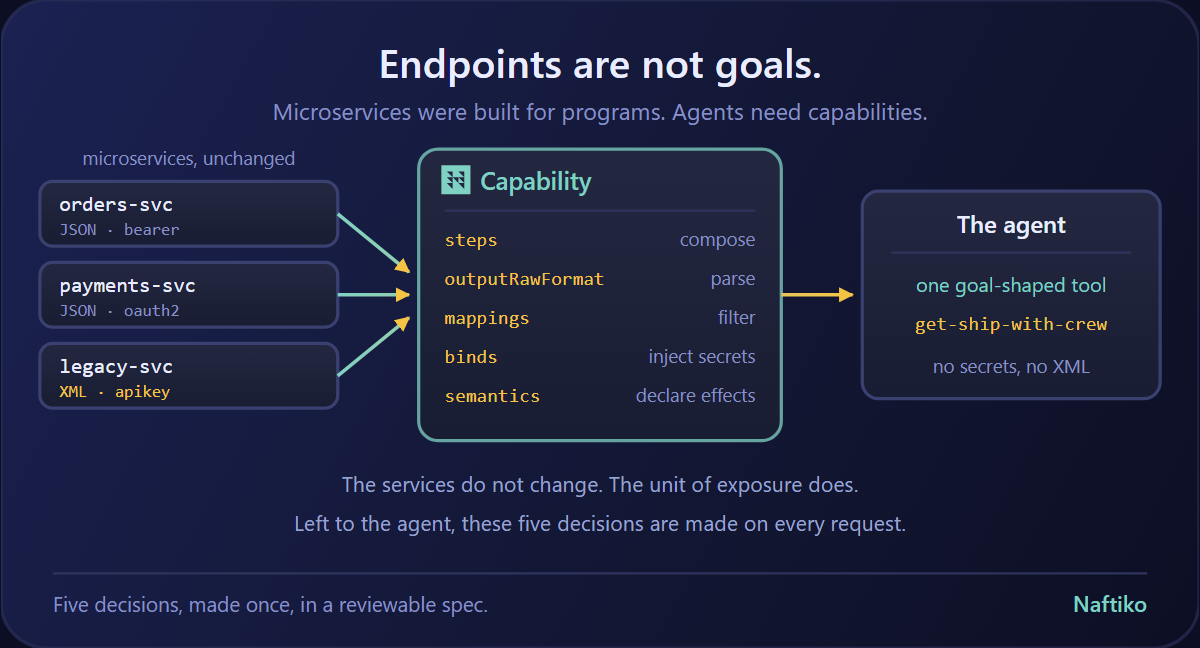
Every vendor MCP — Notion’s included — is shaped to expose the vendor’s full operational surface. That is the right default for the vendor. It is rarely the right default for an enterprise consuming that vendor through an agent. Four things you cannot do from a stock vendor MCP that you can do from a Naftiko capability over the same vendor:
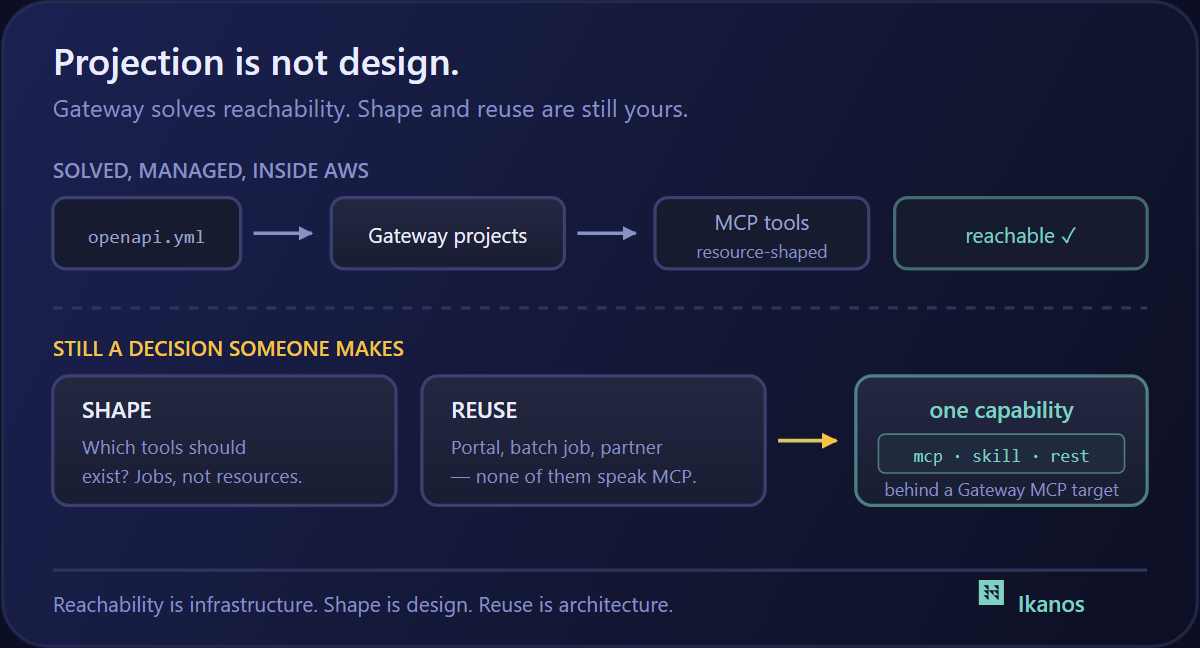
- Fine-grain control over which tools are exposed. Notion’s MCP exposes the operations Notion thought your agent should call. Maybe that is the right list for a chatbot, and the wrong list for a contract-review agent or a financial-reporting agent. A capability lets you pick the subset that fits the workflow, shape the inputs and outputs, and leave everything else off the menu.
- Declarative YAML control over the context engineered for the MCP server. The same Notion endpoint can be wrapped a dozen ways depending on which agent is calling and why. A capability spec is the place that wrapping lives — versioned in Git, reviewed in a pull request, and the single source of truth for “what does this MCP actually look like to our agents.”
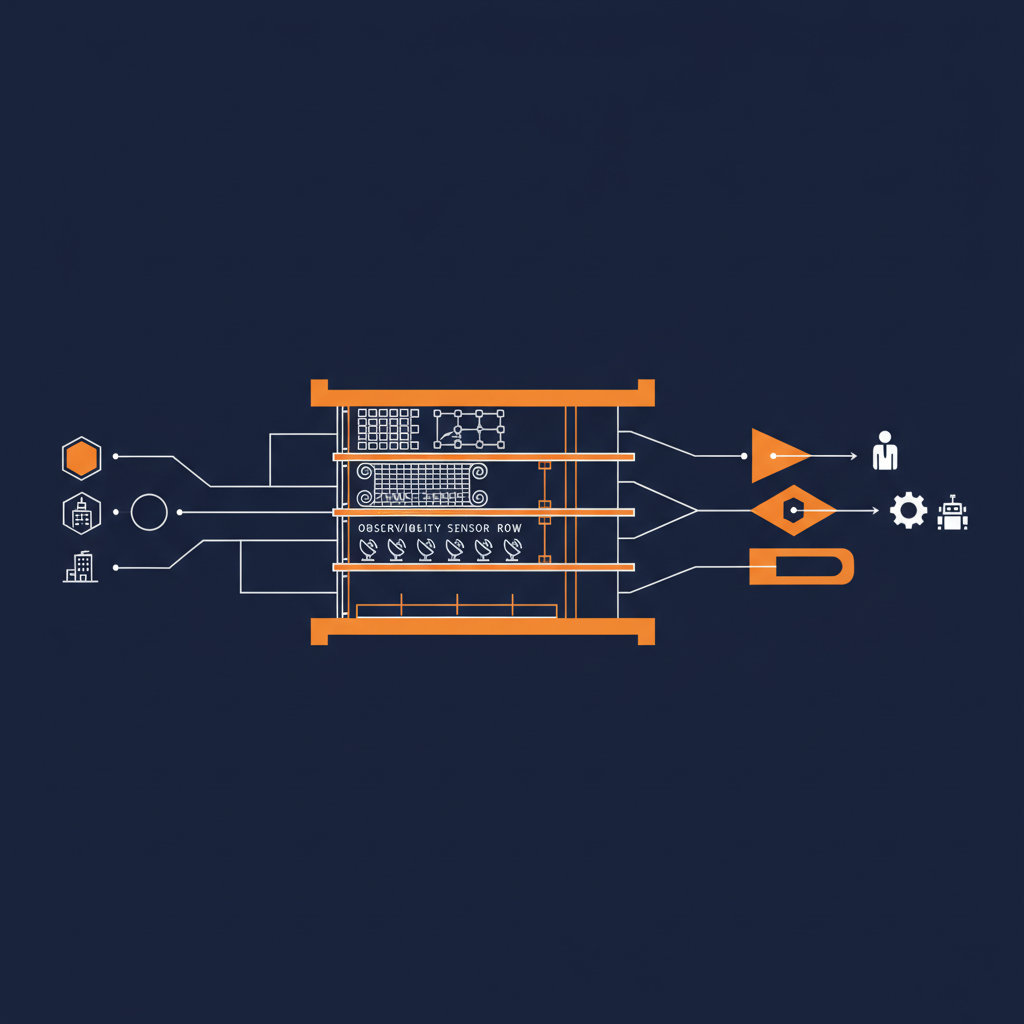
- Observability and governance over your instance of the Notion MCP server. Who called it. From which agent. With what identity. Against what policy. For what cost. The vendor MCP can answer some of these. None of them are useful at fleet scale until they are emitted in a shape that lines up with every other capability in your enterprise.
- The ability to expand beyond Notion to any other provider. This is the one that decides the whole conversation. Today it is Notion. Next week it is Stripe, Salesforce, Snowflake, ServiceNow, your internal payments API, your custom data warehouse, your partner integrations, and the long tail of vendor MCPs that will ship into your stack over the next twelve months. Every vendor MCP is its own snowflake. Naftiko capabilities give you one shape across all of them.
What that looks like
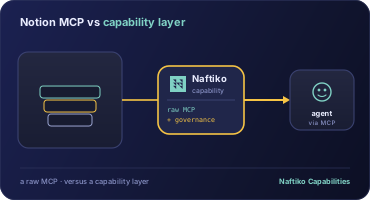
A Naftiko capability that wraps the Notion API is a single YAML file. It declares which Notion tools you want to expose, how you want to shape the context that goes in, what governance tags the operation carries, and what telemetry it emits. It then exposes the result as MCP, REST, A2A, or an Agent Skill — same spec, multiple agent surfaces. Drop in a second capability that wraps Salesforce, or your internal capability over SAP, and you have a uniform fleet of agent-callable operations governed at the spec layer.
Notion’s MCP is the doorway. The capability layer is the building.
When to use which
- Use Notion’s hosted MCP when one agent needs Notion access, you trust Notion’s default tool surface, and you do not need governance, observability, or fleet-level uniformity yet.
- Use Notion’s open-source MCP self-host when you need the traffic inside your perimeter but you are still operating one MCP at a time and Notion’s default tool surface is what you want.
- Use Naftiko when you have more than one MCP server in flight, when the default tool surface is wrong for your agent, when governance and FinOps need to live at the spec layer, or when you have started to see the same shape problem on every new vendor MCP that ships.
The first two paths are real. They will work for many teams. They stop working at exactly the point most enterprises hit this quarter — the second vendor MCP, the first compliance question, the first cost surprise, or the first time an agent calls a tool nobody knew was on the surface.
The bottom line
Vendor MCPs are going to keep shipping. Stripe, Slack, Adyen, Linear, Notion — the list grows every week, and the quality range across them grows with it. You should celebrate every one that ships. And you should also have a place to put them — one place — that gives you fine-grained tool control, declarative context, observability, governance, and the same shape across every other vendor MCP your fleet will consume in the next twelve months.
That place is a capability layer. That is what Naftiko does.