Someone I had been talking to about a job tried Naftiko on a Saturday morning. Cold start. No prior context. They wired up their own MCP server, pointed it at a couple of services they personally used, opened ChatGPT, and started asking questions.
Within ten minutes — counting an authentication speed bump that took a few of those minutes — they were having a conversation about their own weekend. Where did I go yesterday? The model answered with the actual stops on the actual day. The next morning they went for a run, came back, hooked up the run-tracking service, and asked the model to plan a training week against the run they had just done. That worked too.
The whole thing was charming. It was also the wrong takeaway if you stopped at “neat consumer demo.”
The interesting question
The interesting question is the one a lot of executives ask, sometimes out loud and sometimes not. That is cute. What is the business version of that?
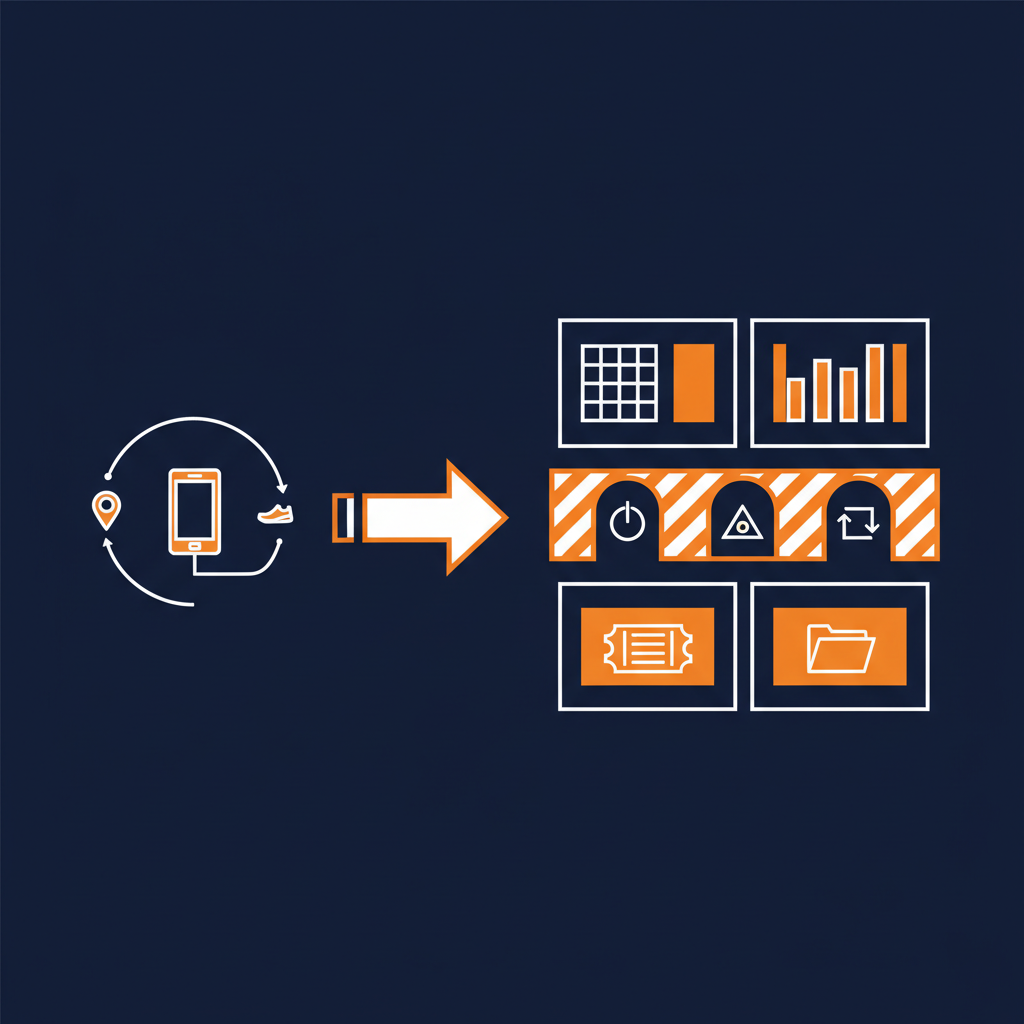
The business version is the same shape, just with different data sources. Instead of a check-in service and a workout tracker, you are wiring agents to the systems your work actually lives in — the design tool, the messaging platform, the document store, the ticketing system, the CRM, the billing platform, the project tracker. The model still asks “what did I do, what is open, what should I do next.” The data comes from a different set of APIs.
If a single person can spin up that loop in ten minutes against their own life, why is the equivalent loop inside a company a multi-quarter project?
Because the consumer demo skips three things
It skips them on purpose. They do not matter for one person on a Saturday. They matter enormously for one company on a Monday.
Scope. When you wire your personal MCP server to a service you use, you give the agent access to all of you. Every check-in. Every run. Every doc. That is fine when it is your own data. It is not fine when it is your customer’s data, your employee’s data, or a regulated record class. The enterprise version needs scope — only the records appropriate to this task, only the fields appropriate to this question, only the operations appropriate to this role.
Provenance. The consumer demo answers a question, and you take it on faith. The enterprise demo answers a question, and someone needs to be able to ask “where did that answer come from, when was that data fetched, who authorized this call, what happened to the result?” Provenance is not a feature you bolt on. It is the spine of any governed AI conversation, and it has to be there from the first call, not the hundredth.
Reuse. Your personal setup works for you because there is one of you. The enterprise version has to work for thirty teams, each of whom is going to want a slightly different version of the same composed answer. If every team builds their own integration to the document store, you have rebuilt the SaaS-sprawl problem one tier deeper. The unit that gets reused has to be the capability — the composed business question — not the underlying API call.
What changes when you take those three seriously
When you take scope, provenance, and reuse seriously from the first integration onward, the demo gets a little less magical and a lot more durable.
The thing in the middle is no longer “the agent talks to the API directly.” It is “the agent talks to a capability that talks to the API.” The capability is a contract — what data it composes, from which sources, with which scopes, returning which fields. It is reviewed. It is version-controlled. It is reusable across teams. It has telemetry. Twenty teams asking different versions of “how is this customer doing right now” can hit the same capability instead of building twenty subtly different integrations.
The agent’s experience does not change. From the model’s point of view, it is still just calling a tool and getting an answer. Everything that makes that answer trustworthy at scale lives one layer down, where it belongs.
Why the ten-minute demo still matters
I do not want to spend this post talking down the consumer moment. The ten-minute demo is important for a reason that has nothing to do with the productivity story.
It changes the conversation. Once a human has held an actual conversation with the model about their own real data and watched the model reason over it correctly, they understand the upside of this technology in a way that no slide deck can deliver. The same person, two weeks later, sitting in a meeting about their company’s AI roadmap, will ask sharper questions. They will know what the answer feels like when it works. They will recognize the shape of “this answer was guessed” versus “this answer was retrieved.”
Get the demo into people’s hands. Then have the conversation about scope, provenance, and reuse. The order matters. You will not convince an executive to invest in the connective tissue if they have never felt what it is connecting.
The translation
So when someone asks me what the business version of the ten-minute demo looks like, here is the translation.
Same shape. Same speed. Different sources. Plus three things the consumer demo did not need — scope, provenance, and reuse — built into the layer between the agent and the systems from the very first call. Not because it makes the demo faster. Because it makes the demo survive contact with a real company.
That is the version we are building toward. The ten-minute moment is real. The work that turns it into something you can stand behind in production is what we are here for.