

For more than a decade, enterprises have invested heavily in APIs, middleware, and integration platforms—yet AI is revealing the limits of these systems faster than anyone expected. While predictions about AI’s transformative potential grow louder, most organizations still struggle to operationalize even their most promising proofs-of-concept. The gap between AI’s promise and enterprise reality is no longer technical; it’s architectural.
AI agents cannot thrive in a world built for static API contracts, brittle scripts, legacy connectors, and manually orchestrated integrations. These tools were designed for a different era—an era of predictable workflows and human-driven interactions—not dynamic, autonomous systems capable of reasoning, planning, and acting. If enterprises want AI to produce real, scalable value, the foundation must evolve.
At Naftiko, we believe that evolution begins with a shift in mental model: moving from Web APIs to a Web of Capabilities.
Why AI integration fails today
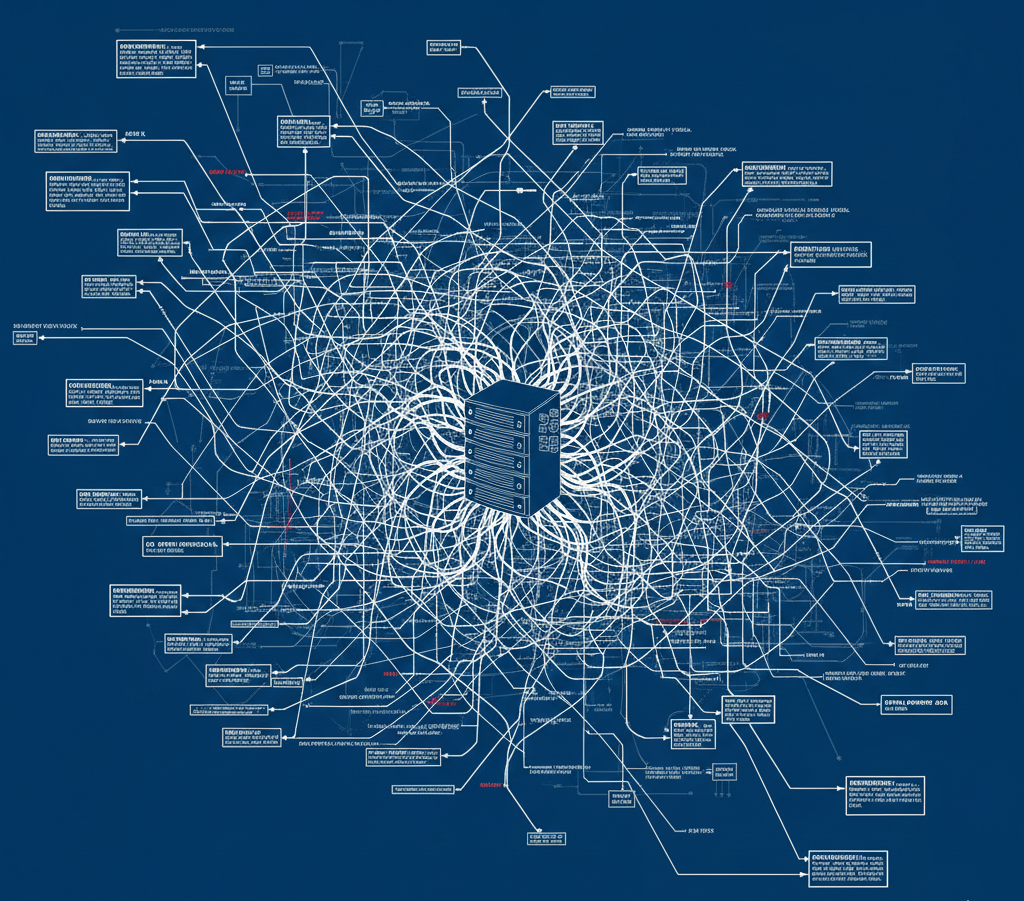
Most AI integration efforts rely on wrapping existing APIs with multi-modal prompts, auto-generating MCP endpoints, or leaning on aging iPaaS pipelines and connector SDKs. These approaches may work for demos, but break under real operational pressure:
- Connectors are brittle, inconsistent, and rarely secure enough for autonomous execution.
- API gateways enforce traffic rules but know nothing about business meaning.
- ESBs and iPaaS tools create centralized bottlenecks and mapping spaghetti.
- Agent frameworks generate wrappers, not reliable, governed business behaviors.
Enterprises are discovering the painful truth: AI can call APIs, but it cannot operate an enterprise made of APIs. Not without a better substrate.
Capabilities are the missing unit of AI integration
A Capability is more than an API, function, or connector. It’s a governed, discoverable, composable, observable unit of business function—designed for humans and agents.
Capabilities elevate traditional APIs by embedding:
- Business meaning: semantics, expected outcomes, constraints
- Operational guardrails: authentication, masking, cost controls, rate limits
- Governed autonomy: safe execution patterns for AI-specific workloads
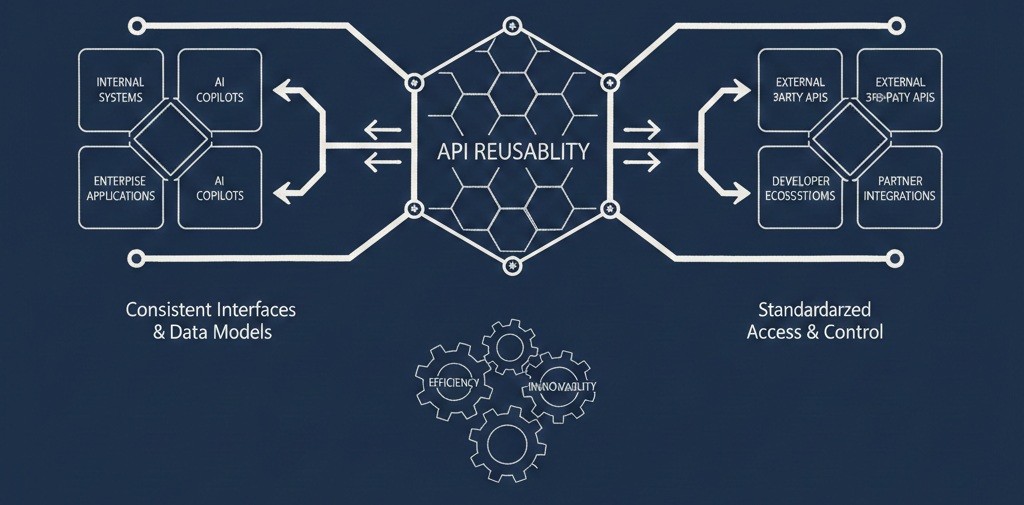
- Polyglot access: REST, events, functions, agent protocols, and MCP
- Composability: the ability to build higher-order capabilities from lower-level ones
This shift answers the central question enterprises are grappling with: What is the smallest, safest, most reusable unit of business function an AI agent should be allowed to operate? The answer is Capabilities.
From capabilities to a capability fabric
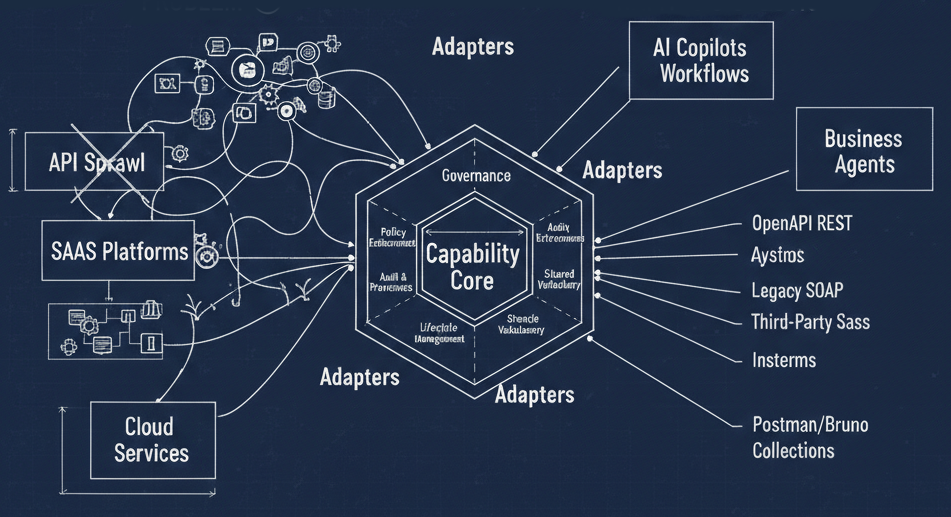
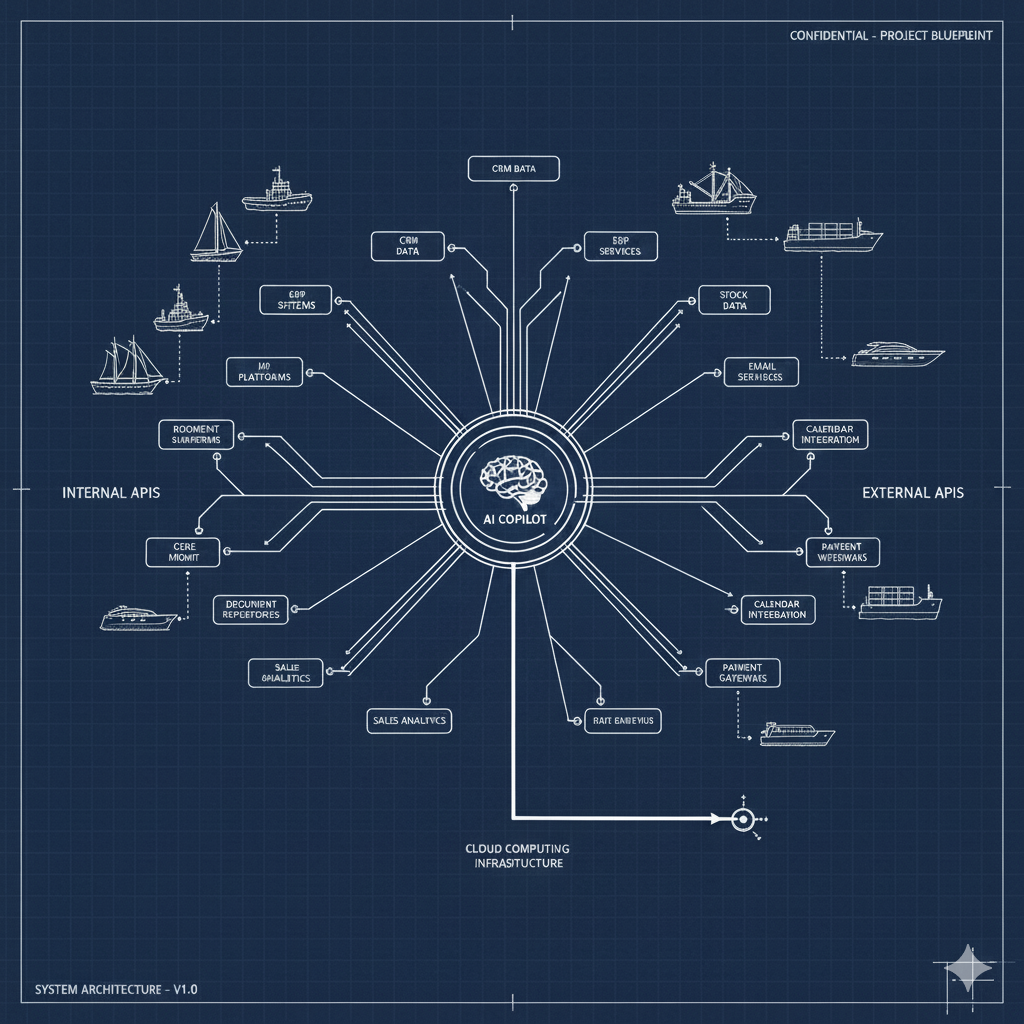
When dozens or hundreds of capabilities exist across teams and systems, enterprises need a cohesive way to govern, observe, and compose them. This is where the Capability Fabric emerges—a new architectural pattern purpose-built for AI-era integration.
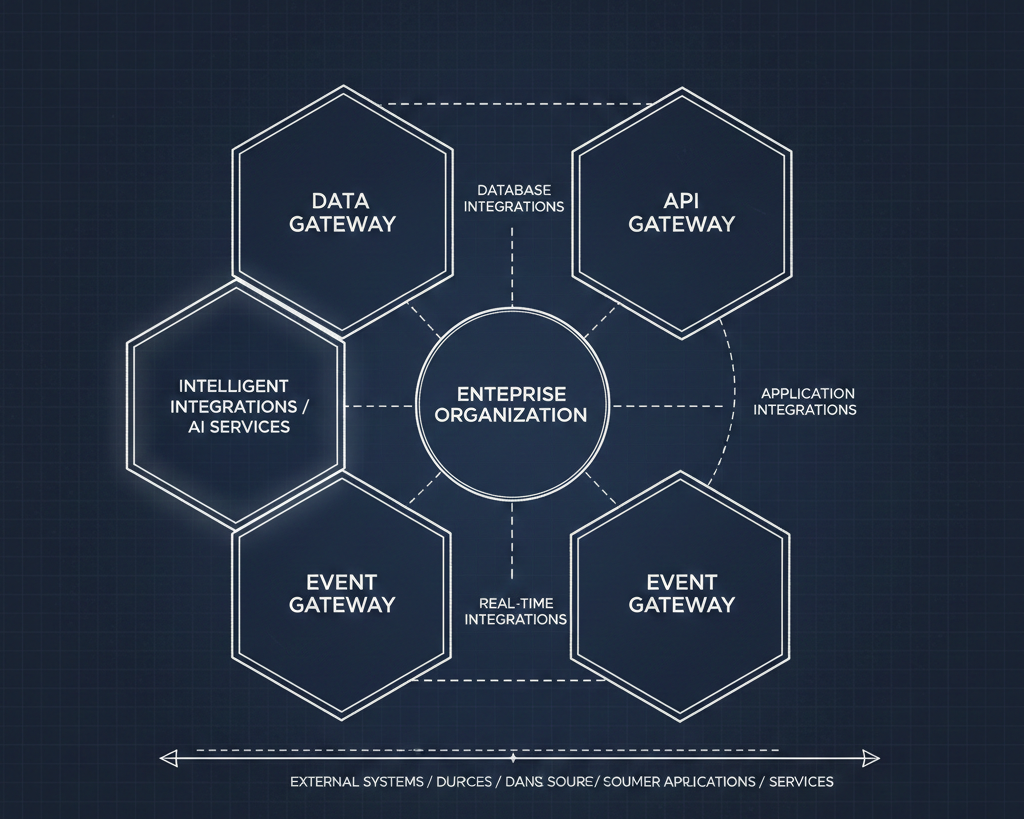
A Capability Fabric is not a gateway. It is not a service mesh. It is not an ESB. It is not an iPaaS. It is a distributed, domain-aligned, policy-driven coordination layer for autonomous interactions between humans, agents, and systems. Where a gateway handles traffic, where a mesh handles service connectivity, where an ESB handles workflows,the Capability Fabric handles meaning and safe execution.
A capability fabric provides:
- Domain-level composition aligned with strategic business functions
- Layered governance across source, domain, and experience contexts
- Operational observability with metrics tied to cost, security, and quality
- Policy controls at capability boundaries
- AI-ready execution for autonomous agents and multi-modal experiences
It becomes the connective tissue that lets AI actually do work—securely, consistently, and with business alignment.
The web of capabilities
Once capabilities proliferate within and between organizations, something larger starts to emerge—a new layer of the web. A Web of Capabilities. This is the network the Semantic Web aspired to create but couldn’t achieve, because it lacked:
- Executable semantics
- Distributed governance
- Cross-domain policy
- Practical adoption inside enterprises
Capabilities supply the missing ingredients. The Capability Fabric supplies the execution environment. Agents supply the demand. Together, they form an Agentic Web: a global fabric of purposeful, governed, inter-operable business capabilities. This is where Naftiko is focused—not on short-lived AI demos, but on building the architecture that will empower autonomous systems to act safely and meaningfully at scale.
Why this matters for Naftiko customers
The Capability Fabric is not a theoretical construct. It’s a practical, incremental architecture designed to meet enterprises where they are:
- Migrating from ESBs to modern integration patterns
- Moving from API gateways to federated domain platforms
- Modernizing iPaaS-driven automations
- Aligning platforms with Domain-Driven Design
- Implementing GitOps, DevSecOps, and Platform Engineering principles
- Preparing for AI agents that must operate real systems
Naftiko’s Capability Fabric provides the governance, observability, controls, and composition patterns needed to integrate AI safely and reliably—without requiring enterprises to abandon existing investments by connecting the dots across:
- SaaS
- APIs
- Events
- Data products
- Platforms
- Teams
- Domains
- Costs
- Security
- Compliance
And it does so in a way that aligns IT and the business around a shared unit of work: the Capability.
An architecture for the agentic future
APIs were the right primitive for the Web 2.0 era. Services were the right primitive for cloud-native. But AI demands something new. Capabilities are the building blocks. A Capability Fabric becomes the foundation. And the Web of Capabilities becomes the next phase of the Web. This is the architecture Naftiko was founded to deliver—and why we believe enterprises ready to evolve beyond simple integrations to thrive in the agentic era.