For years, we’ve said “design first” when talking about APIs. But only recently has that idea become truly practical at scale.
At its core, a design-first approach is a product mindset applied to APIs. If an API is a product—just like any other product—then it deserves the same discipline. You don’t start by writing code. You start by understanding the market.
You gather requirements.
You shape a hypothesis.
You validate that hypothesis.
Then—and only then—do you build.
APIs Are Products, Not Just Code
A design-first approach is fundamentally outside-in. It begins with the market and works backward into implementation.
You ask:
- What problem are we solving?
- Who is it for?
- What does a good solution look like?
- How do we validate that before we ship?
The design itself is just a hypothesis. It’s your best current guess at what will solve the customer’s problem. You take that design back to the market, validate it, iterate, refine—and only then move toward implementation.
This discipline was crucial when building software was expensive. Today, building is cheaper. You can spin up services, generate code, deploy infrastructure, and even scaffold APIs using AI in minutes.
But “cheaper” does not mean “free.”
If you build the wrong thing, you don’t just waste tokens or compute cycles. You risk something far more expensive: your reputation. Shipping the wrong API into the market erodes trust. And trust, especially in platform ecosystems, is hard to regain.
It’s still important to build the right thing.
Why Design-First Was Ahead of Its Time
Back around 2015—during the early API Days era—design-first was a compelling idea. But it was ahead of its time.
The tools were clunky.
The workflows were unnatural.
And most importantly, it required a mindset shift.
Developers were used to “barfing out code” and calling that the API. If something needed fixing, you went back into the code and changed it. The code was the API. The code was the truth.
But as APIs became more product-like—more strategic, more revenue-driving, more ecosystem-enabling—we realized that code alone wasn’t enough.
We needed:
- A clear contract
- A repeatable definition
- A way to reason about behavior
- A shared understanding across teams
That meant specifications.
Yet even then, the tooling didn’t fully support the vision. Writing specs often felt like extra work instead of the primary activity.
That’s changing.
From Design-First to Spec-Driven
Today, we’re entering the era of spec-driven development.
This is more than just writing an OpenAPI file before you code. It’s a broader philosophy:
- The PRD (Product Requirements Document) captures the market need.
- The technical specification defines the system’s behavior.
- Implementation serves the specification—not the other way around.
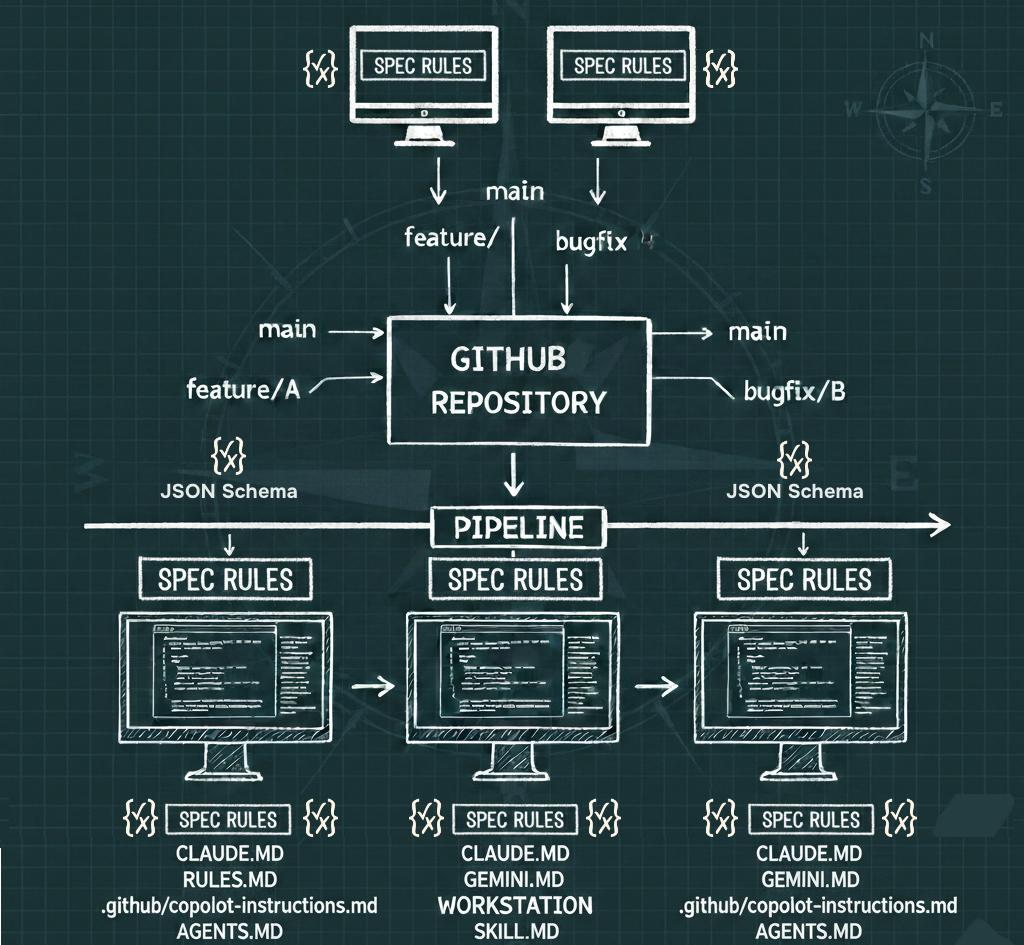
The spec is no longer documentation that trails behind the code. It becomes the source artifact from which everything flows:
- Mock servers
- SDKs
- Documentation
- Tests
- Governance rules
- Even AI-driven automation
The spec becomes the stable center of gravity.
And now, for the first time, the tools are good enough to make this practical.
The Tooling Has Finally Caught Up
In the past, the barrier to design-first was friction:
- Structured formats felt rigid.
- YAML and JSON weren’t friendly for non-technical contributors.
- Collaboration across product and engineering was awkward.
Today, that friction is lower.
We have:
- Mature ecosystems around formats like OpenAPI Specification and API Blueprint
- Markdown-native workflows
- Design linters and governance tooling
- Mocking and contract testing automation
- AI tools that can translate natural language into structured specifications
Interestingly, the debate over intermediate formats—Markdown vs YAML vs JSON—matters less than it used to.
Humans don’t necessarily need to hand-author deeply structured specs anymore. They can describe intent in natural language. Machines can translate that into structured artifacts.
What matters is not the syntax.
What matters is clarity of intent.
The real skill isn’t writing YAML.
It’s knowing what you want to build.
The Human Role Has Shifted
If machines can translate natural language into structured specifications, then the human value shifts upward:
- Understanding market signals
- Exercising product taste
- Forming coherent hypotheses
- Validating against real-world needs
- Iterating thoughtfully
The structured specification still matters. In fact, it matters more than ever. But humans don’t need to wrestle with every bracket and indentation.
Instead, they need to:
- Capture the right requirements.
- Shape the right abstractions.
- Ensure the spec reflects reality.
- Maintain alignment between product intent and technical behavior.
Spec-driven development amplifies human judgment. It doesn’t replace it.
Reputation Is the Real Cost
It’s tempting to think that in the age of AI-generated code, mistakes are cheap.
They aren’t.
Every API you release becomes part of your public contract. If it’s poorly designed, inconsistent, or unstable, you don’t just incur refactoring costs—you erode trust with developers and partners.
And in platform ecosystems, trust is currency.
Design-first and spec-driven approaches protect that currency. They ensure that what you release has been thought through, validated, and intentionally shaped.
From Idea to Reality
For years, we talked about design-first APIs as an aspirational practice.
Now it’s operational.
With modern tooling, AI assistance, and mature specification ecosystems, spec-driven development is no longer a philosophical stance—it’s a scalable methodology.
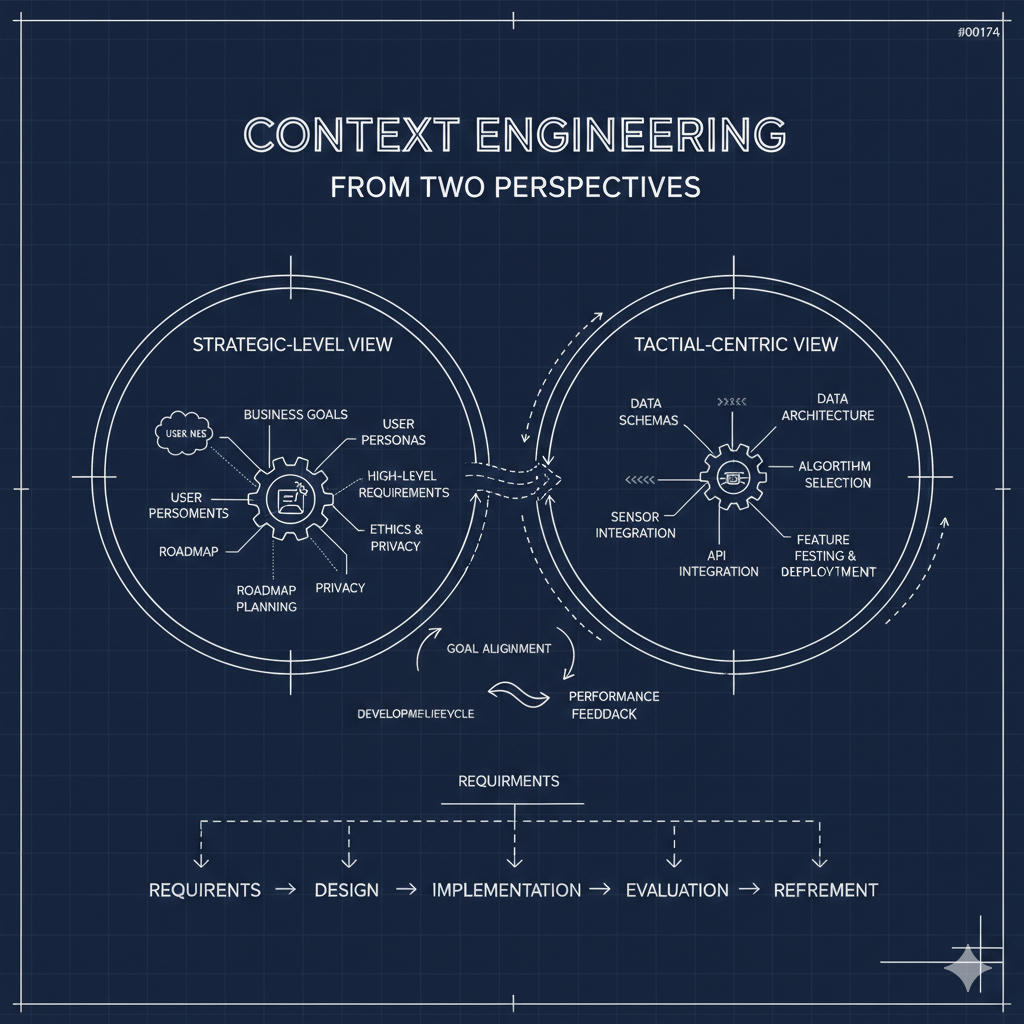
The workflow looks something like this:
- Capture market requirements (PRD).
- Shape a design hypothesis.
- Validate with stakeholders.
- Express in structured specification.
- Generate artifacts.
- Iterate continuously.
Code becomes an implementation detail.
The specification becomes the product’s backbone.
Build the Right Thing
In the end, the principle hasn’t changed:
It’s still important to build the right thing.
What’s changed is that we finally have the tools to make “design first” practical at speed and scale. Whether you prefer Markdown, YAML, JSON, or natural language feeding into structured outputs, the goal is the same:
- Know what you want to build.
- Validate it with the market.
- Capture it clearly in a specification.
- Let implementation follow.
Design-first was ahead of its time.
Spec-driven development is its realization.
And in a world where APIs are products—and products are ecosystems—that shift isn’t optional anymore.